
Published on 15 March 2026
Solar PV Tax Deductions 2026: How It Really Works (Requirements, Rates, Documents)
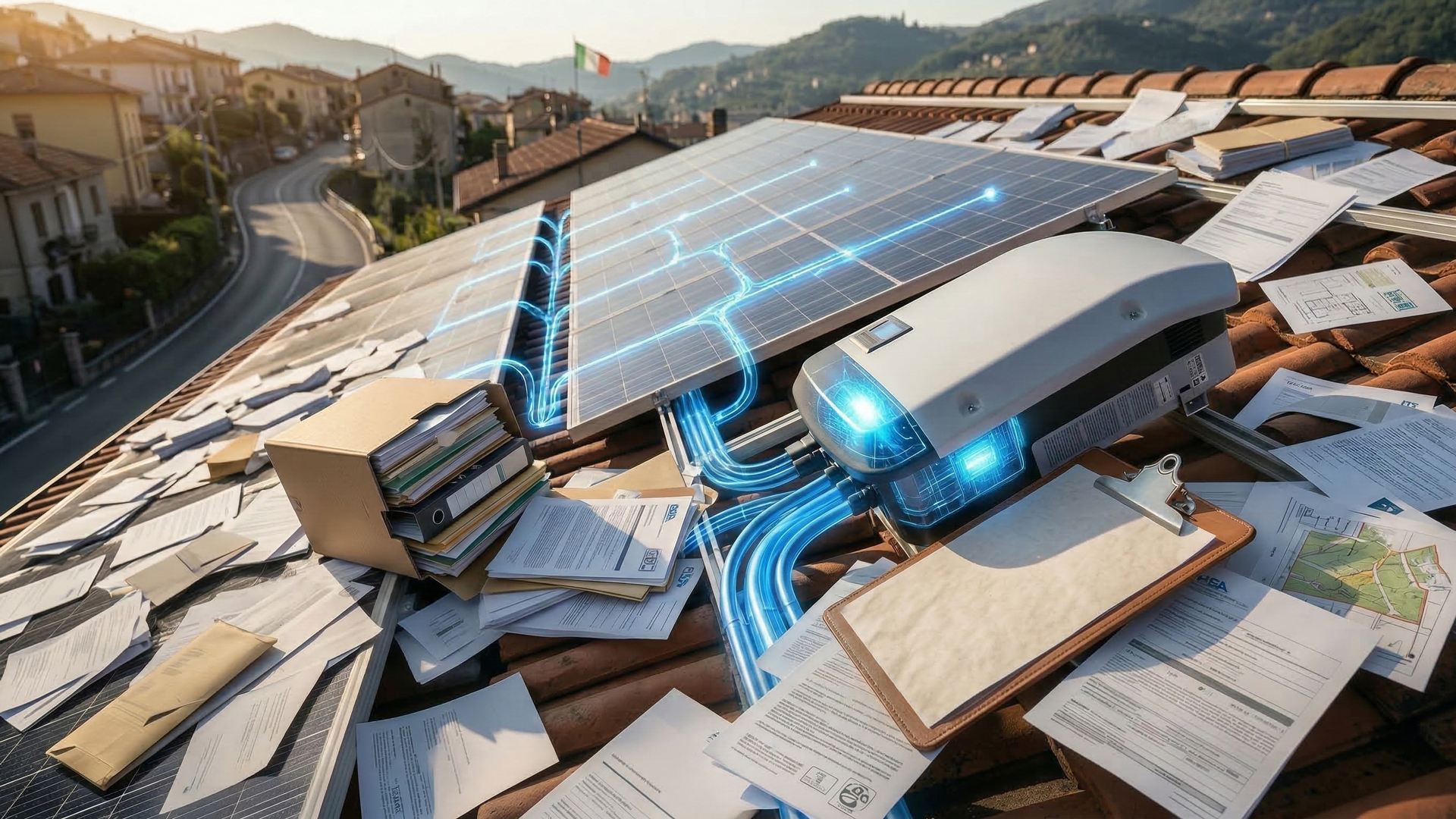
Solar tax deductions have ended up in a regulatory blender. The Superbonus 110% era is locked away, energy prices remain unstable, and installers' warehouses are full of material blocking liquidity. If you are a industry professional or a private individual looking to cut bills, today the only viable path is the structural one: the tax discount spread over several years, backed by traceable payments and impeccable documentation.
The market has changed and so have the rules. In 2026, looking at the discount percentage is no longer enough. You have to deal with new income limits imposed by the Government, the end of "Scambio sul Posto" (Net Metering), and renewable integration obligations for those renovating. Above all, you must learn to be efficient not just with energy, but with capital: buying or selling used and "New Old Stock" hardware is no longer a taboo, but a formidable financial lever.
In this operational guide, we get straight to the point. I’ll explain exactly which incentive to use, how the 2026 rates work, how to avoid the "Article 16-ter" trap for high earners, and how to manage certified used hardware to slash system costs or monetize your warehouse returns. No theory, just field practice.
Which bonus is used for solar deductions? Let’s clear up any misunderstandings immediately. In Italy, installing a solar PV system typically falls under the deduction for interventions aimed at energy saving and the use of renewable sources (Art. 16-bis of TUIR). Note a common mistake: solar does not usually fall under the "classic" Ecobonus (for pure energy requalification like thermal insulation), because the Revenue Agency doesn't consider it a mere "energy consumption containment" intervention. Therefore, we almost always operate within the Restructuring Bonus (or Home Bonus).
How much can you deduct: 2026 rates and spending limits The 2025-2026 framework introduced a clear distinction based on property type. The State rewards those investing in their primary residence.
Installments & Ceiling: The deduction is always split into 10 equal annual installments on a maximum spend of €96,000 per property unit.
Primary Residence (2025–2026): 50% rate.
Other Properties / Second Homes (2025–2026): 36% rate.
The trap for high earners: The new Art. 16-ter From 2025, confirmed for 2026, there is a heavy cap for those with high incomes (over €75,000). If your income is high and you don't have enough "tax capacity," you risk losing part of the deduction. Always check the numbers with your accountant before signing major contracts.
Used Hardware, Revamping, and KTS Strategy A solar system has an asymmetrical lifecycle: panels last 25-30 years, while inverters often fail after 10-12. Can you deduct used or New Old Stock (NOS) components? Absolutely yes. The law doesn't require hardware to be fresh off the factory line. If you buy a certified used inverter on the KTS marketplace, you can include it in your 50% deduction. The rules are: regular invoice, "bonifico parlante" (specific bank transfer), and a Declaration of Conformity (DICO).
FAQ – Solar PV Deductions
Can I deduct a used inverter? Yes, as long as there is a clear invoice, traceable payment, and the system is certified by the installer.
Is the "bonifico parlante" mandatory? Yes. An ordinary transfer will invalidate your bonus.
Conclusion The real margin today isn't just chasing state subsidies, but optimizing material costs at the source. On KTS, we circulate hardware that works, offering liquidity to companies and guaranteed savings to buyers.
'%3e%3crect%20width='12'%20height='12'%20fill='white'/%3e%3cpath%20d='M11.25%206.00073C11.2512%206.15454%2011.2044%206.3049%2011.1162%206.43092C11.028%206.55693%2010.9027%206.65233%2010.7578%206.70385L7.78406%207.78526L6.70312%2010.7585C6.64985%2010.9021%206.55392%2011.0259%206.42823%2011.1133C6.30253%2011.2007%206.1531%2011.2476%206%2011.2476C5.8469%2011.2476%205.69746%2011.2007%205.57177%2011.1133C5.44608%2011.0259%205.35015%2010.9021%205.29687%2010.7585L4.21594%207.78479L1.24218%206.70385C1.09865%206.65058%200.974862%206.55465%200.887446%206.42896C0.800029%206.30327%200.753174%206.15383%200.753174%206.00073C0.753174%205.84763%200.800029%205.69819%200.887446%205.5725C0.974862%205.44681%201.09865%205.35088%201.24218%205.2976L4.21594%204.21667L5.29687%201.24292C5.35015%201.09938%205.44608%200.975595%205.57177%200.888178C5.69746%200.800762%205.8469%200.753906%206%200.753906C6.1531%200.753906%206.30253%200.800762%206.42823%200.888178C6.55392%200.975595%206.64985%201.09938%206.70312%201.24292L7.78453%204.21667L10.7578%205.2976C10.9027%205.34913%2011.028%205.44453%2011.1162%205.57054C11.2044%205.69656%2011.2512%205.84692%2011.25%206.00073Z'%20fill='%231C95C2'/%3e%3c/g%3e%3cdefs%3e%3cclipPath%20id='clip0_5437_68169'%3e%3crect%20width='12'%20height='12'%20fill='white'/%3e%3c/clipPath%3e%3c/defs%3e%3c/svg%3e) Monocrystalline
Monocrystalline Single-phase
'%3e%3cpath%20fill-rule='evenodd'%20clip-rule='evenodd'%20d='M2.42569%200.790688C2.60794%200.236437%203.39194%200.236437%203.57419%200.790688L3.97894%202.02094L5.20919%202.42569C5.76344%202.60794%205.76344%203.39194%205.20919%203.57419L3.97894%203.97894L3.57419%205.20919C3.39194%205.76344%202.60794%205.76344%202.42569%205.20919L2.02094%203.97894L0.790688%203.57419C0.236437%203.39194%200.236437%202.60794%200.790688%202.42569L2.02094%202.02094L2.42569%200.790688ZM7.34869%201.84619C7.55544%201.21794%208.44444%201.21794%208.65119%201.84619L9.27044%203.72944L11.1537%204.34869C11.7819%204.55544%2011.7819%205.44444%2011.1537%205.65119L9.27044%206.27044L8.65119%208.15369C8.44444%208.78219%207.55544%208.78219%207.34869%208.15369L6.72944%206.27044L4.84619%205.65119C4.21769%205.44444%204.21769%204.55544%204.84619%204.34869L6.72944%203.72944L7.34869%201.84619ZM4.59869%206.30819C4.40869%205.73069%203.59119%205.73069%203.40119%206.30819L2.94519%207.69519L1.55819%208.15144C0.980687%208.34144%200.980687%209.15844%201.55819%209.34844L2.94519%209.80469L3.40144%2011.1917C3.59144%2011.7692%204.40844%2011.7692%204.59844%2011.1917L5.05469%209.80469L6.44169%209.34844C7.01919%209.15844%207.01919%208.34144%206.44169%208.15144L5.05469%207.69519L4.59869%206.30819Z'%20fill='%231C95C2'/%3e%3c/g%3e%3cdefs%3e%3cclipPath%20id='clip0_5437_68218'%3e%3crect%20width='12'%20height='12'%20fill='white'/%3e%3c/clipPath%3e%3c/defs%3e%3c/svg%3e) Polycrystalline
Polycrystalline