
Published on 11 March 2026
Inverters for solar panel systems: the 3 vital functions and when to choose used
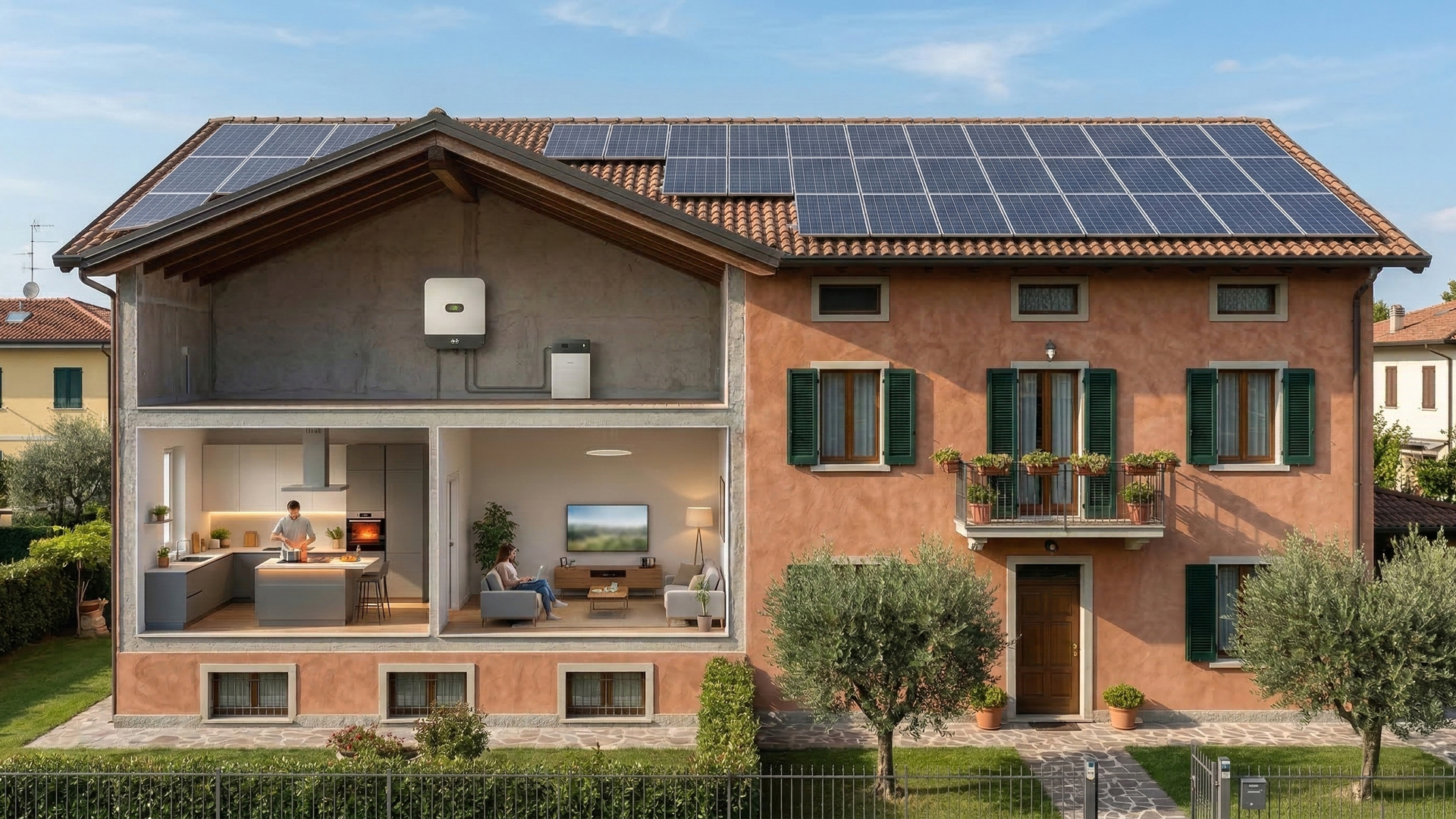
When planning the energy transition, everyone looks at the roof. But the truth is that in solar panel systems, the inverter and the panels are two sides of the same coin. It's a bit like deciding to go skiing: you can buy the most expensive ski suit on the market, but if you don't have skis, you aren't going anywhere.
We are used to focusing on the modules, but behind every solar system, there is always an inverter working in silence. And, contrary to what many salespeople say, it doesn't necessarily have to be fresh out of the factory.
Let's see how this fundamental component works and why the second-hand market is becoming the preferred choice for those who want to maximize their return on investment without giving up reliability.
How an inverter works: the 3 fundamental activities
The inverter is the true brain of the system. Without it, the energy captured by the sun would literally be unusable. Specifically, it does three things:
Converts energy: It transforms the direct current (DC) produced by the solar panels into alternating current (AC), the only kind we can use to power the sockets and appliances in our homes.
Acts as a protective shield: It acts as an advanced safety system, protecting the domestic electrical system from surges and abnormal grid overvoltages.
Maximizes efficiency: Thanks to its trackers (MPPT), it constantly optimizes the conversion of sunlight into electricity, squeezing the maximum out of the panels under any irradiance condition.
Used inverters: clearing a taboo
There is a dogma in the industry: "the inverter must absolutely be new". It's false. Just as there is a thriving used market for the automotive sector or high-end smartphones, the same applies to solar hardware.
We are talking about devices removed from still-functioning systems (often for simple upgrades or industrial revamping) that are in the prime of their useful life. At KTS, our philosophy is clear: "If it works, it's not waste, it's a resource". We clearly state that the inverter wears out faster than the panels and that used is not always exactly equal to new, but it is the smart choice for specific contexts.
3 cases where a used inverter is the winning choice
Not all systems have to power a hyper-technological 10 kW villa. Here are three scenarios where a second-hand product beats a new one across the board.
1. Second homes and low energy loads
Do you need to electrify a tool shed or the mountain cabin you use three weekends a year? The energy requirement is very low, and the system rests for long periods. Buying a top-of-the-range new model for such sporadic use is a waste of capital you will never amortize. A used inverter does exactly the same job, undergoes very little mechanical stress, and solves the problem for a negligible expense.
2. Isolated installations and "offline reliability"
The latest generation inverters are sophisticated machines. They often demand stable Wi-Fi connections, always-active apps, and continuous firmware updates. But what happens if your cabin is in an area with no cell reception? Hyper-connection becomes a flaw. An inverter from a few years ago, with solid and stable electronics, doesn't look for the grid: it turns on and produces. It is the perfect "install and forget" solution for remote areas.
3. Quick repair (Plug & Play) and crashing costs
You have a burnt-out inverter on an 8-year-old system. If you buy today's new model, you risk having to redo the wiring, adapt the strings, and go crazy with bureaucracy. Looking for a "legacy" component (out of production but functional) allows you to repair the system quickly without having to redo projects. Furthermore, a used or New Old Stock inverter drastically lowers the economic barrier to entry, costing a fraction compared to the new price list.
FAQ
Is a used inverter safe for my system?
Absolutely yes, if purchased through reliable channels. Inverters removed from revamping systems are tested and functional. The important thing is to verify that the specifications are compatible with the strings of your existing panels.
Can I use an inverter to build a system without connecting to the electrical grid?
Yes. These are "Off-Grid" (island) systems, which work in complete autonomy and are not connected to the national electrical grid. However, without the grid, it is imperative to have a storage system (batteries) to store the energy.
Why do I find more used inverters to replace than used panels?
Because the inverter is the "muscle" of the system. It manages heat, voltage spikes, and continuous conversions. Being an active electronic component, it is physiological that it wears out and is replaced more frequently than the solar panel, which is a predominantly static component.
Conclusion
Building or repairing a solar system doesn't have to empty your bank account. Whether you are trying to power an off-grid cabin, or you need an unfindable spare part to restart production, the second-hand market has the answers. KTS is not just a simple e-commerce, but a technological hub that connects those who have photovoltaic material to monetize with those looking for components for their system. Go to the marketplace and find the right hardware for your energy independence.
'%3e%3crect%20width='12'%20height='12'%20fill='white'/%3e%3cpath%20d='M11.25%206.00073C11.2512%206.15454%2011.2044%206.3049%2011.1162%206.43092C11.028%206.55693%2010.9027%206.65233%2010.7578%206.70385L7.78406%207.78526L6.70312%2010.7585C6.64985%2010.9021%206.55392%2011.0259%206.42823%2011.1133C6.30253%2011.2007%206.1531%2011.2476%206%2011.2476C5.8469%2011.2476%205.69746%2011.2007%205.57177%2011.1133C5.44608%2011.0259%205.35015%2010.9021%205.29687%2010.7585L4.21594%207.78479L1.24218%206.70385C1.09865%206.65058%200.974862%206.55465%200.887446%206.42896C0.800029%206.30327%200.753174%206.15383%200.753174%206.00073C0.753174%205.84763%200.800029%205.69819%200.887446%205.5725C0.974862%205.44681%201.09865%205.35088%201.24218%205.2976L4.21594%204.21667L5.29687%201.24292C5.35015%201.09938%205.44608%200.975595%205.57177%200.888178C5.69746%200.800762%205.8469%200.753906%206%200.753906C6.1531%200.753906%206.30253%200.800762%206.42823%200.888178C6.55392%200.975595%206.64985%201.09938%206.70312%201.24292L7.78453%204.21667L10.7578%205.2976C10.9027%205.34913%2011.028%205.44453%2011.1162%205.57054C11.2044%205.69656%2011.2512%205.84692%2011.25%206.00073Z'%20fill='%231C95C2'/%3e%3c/g%3e%3cdefs%3e%3cclipPath%20id='clip0_5437_68169'%3e%3crect%20width='12'%20height='12'%20fill='white'/%3e%3c/clipPath%3e%3c/defs%3e%3c/svg%3e) Monocrystalline
Monocrystalline Single-phase
'%3e%3cpath%20fill-rule='evenodd'%20clip-rule='evenodd'%20d='M2.42569%200.790688C2.60794%200.236437%203.39194%200.236437%203.57419%200.790688L3.97894%202.02094L5.20919%202.42569C5.76344%202.60794%205.76344%203.39194%205.20919%203.57419L3.97894%203.97894L3.57419%205.20919C3.39194%205.76344%202.60794%205.76344%202.42569%205.20919L2.02094%203.97894L0.790688%203.57419C0.236437%203.39194%200.236437%202.60794%200.790688%202.42569L2.02094%202.02094L2.42569%200.790688ZM7.34869%201.84619C7.55544%201.21794%208.44444%201.21794%208.65119%201.84619L9.27044%203.72944L11.1537%204.34869C11.7819%204.55544%2011.7819%205.44444%2011.1537%205.65119L9.27044%206.27044L8.65119%208.15369C8.44444%208.78219%207.55544%208.78219%207.34869%208.15369L6.72944%206.27044L4.84619%205.65119C4.21769%205.44444%204.21769%204.55544%204.84619%204.34869L6.72944%203.72944L7.34869%201.84619ZM4.59869%206.30819C4.40869%205.73069%203.59119%205.73069%203.40119%206.30819L2.94519%207.69519L1.55819%208.15144C0.980687%208.34144%200.980687%209.15844%201.55819%209.34844L2.94519%209.80469L3.40144%2011.1917C3.59144%2011.7692%204.40844%2011.7692%204.59844%2011.1917L5.05469%209.80469L6.44169%209.34844C7.01919%209.15844%207.01919%208.34144%206.44169%208.15144L5.05469%207.69519L4.59869%206.30819Z'%20fill='%231C95C2'/%3e%3c/g%3e%3cdefs%3e%3cclipPath%20id='clip0_5437_68218'%3e%3crect%20width='12'%20height='12'%20fill='white'/%3e%3c/clipPath%3e%3c/defs%3e%3c/svg%3e) Polycrystalline
Polycrystalline